Blog
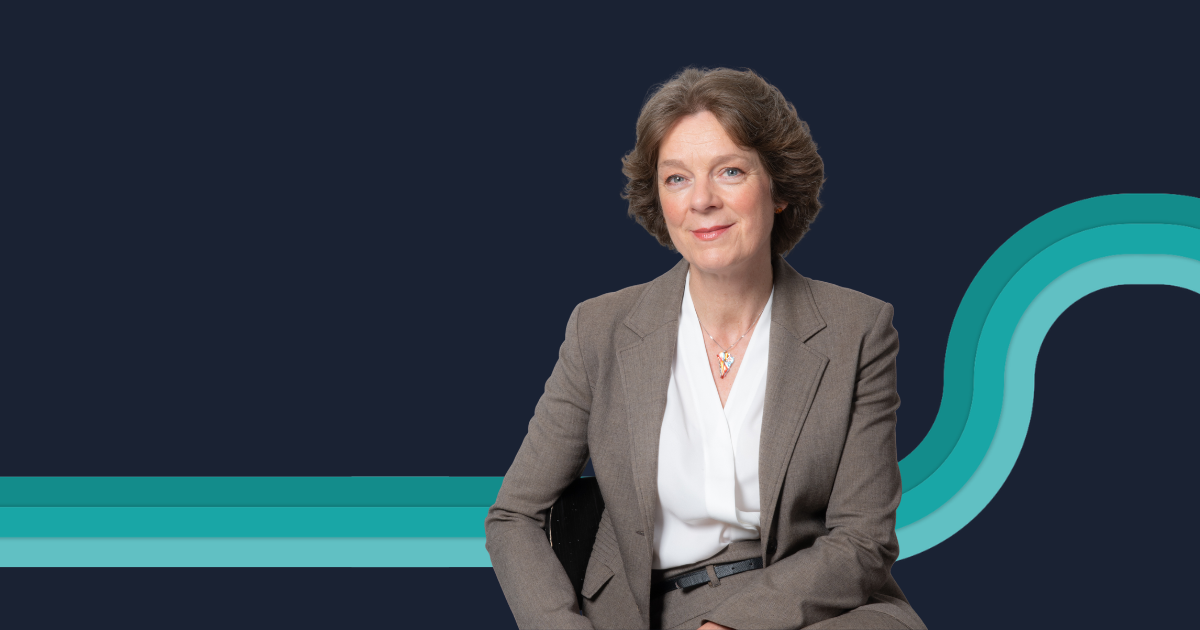
Meet Alison Baptiste, Head of Profession for project delivery

Project delivery is how government turns policy ideas into services, infrastructure and change that people can see and use.
Across government, project delivery professionals work with policy, digital, commercial, finance, analysis, operations and many other professions to deliver some of the most complex work in the public sector. The Government Project Delivery website brings together services, knowledge and community for the function and profession, including standards and guidance, the Government Projects Academy and The Teal Book.
Alison Baptiste is the new Head of Profession and Deputy Head of Function for Project Delivery across government. We spoke to Alison about her career, what she has learned from complex delivery, and what she wants the function and profession to focus on next.
What first drew you to project delivery?
I trained as a civil engineer, and engineers do projects! I have been in project delivery from the start of my career, even if I did not always call it project delivery at the time.
A common theme throughout my career has been water. I have worked on water supply, water treatment, irrigation, flood defence, reservoirs, coastal schemes, river schemes and barriers. I have also seen delivery from many different angles: detailed design, project management, construction, operational delivery and emergency response.
That breadth has shaped how I think about delivery. You need to understand the problem, design with purpose, and deliver for people.
My early career took me overseas, first in the charity sector in Nepal, then in the private sector in Indonesia, before I moved into the private sector in the UK and then into the public sector with the Environment Agency.
What motivated me was the positive impact engineering projects have on people’s lives, such as how access to clean water transforms a community. That focus on outcomes for people is what drew me towards public service.
In the public sector, I found I enjoyed the breadth. You are not just looking at the technical answer. You are also thinking about the environmental, social and operational context, and how decisions work in practice. Later, at the Environment Agency, I moved from leading and delivering projects into strategy and policy work that connected with Defra. That gave me a real interest in the upstream part of delivery, where policy and project delivery meet.
What is the story behind your CBE? What work are you proudest of?
One of the pieces of work for which I am most proud is the flood response and recovery work after the relentlessly wet winters of 2013 to 2014 and 2015 to 2016.
After the coastal surge and repeated storms in 2013 to 2014, large parts of the country were devastated by flooding. The Environment Agency had to respond to the immediate emergency, support communities, and restore flood defences before the following winter.
I led the national recovery and learning work. We had to identify the work needed, procure it quickly and get defences repaired at pace. Between March and October, we completed just under 1,000 projects to restore protection for around 200,000 homes.
That work was part of the reason I believe I was nominated for a CBE. The honours process is not something you are involved in yourself. When the letter arrived from the Cabinet Office, shortly after I had joined the Infrastructure and Projects Authority, I assumed it was something to do with my new job. It was a complete surprise.
What stayed with me was not just the honour itself, although of course that meant a huge amount. It was the fact that colleagues had taken the time to put me forward, gather independent references and make the case. That felt very humbling. It reflected the effort of a whole team and the impact of work that mattered to communities.
The recovery work was fast paced and under intense scrutiny. What I remember most is the teamwork. I created the team from scratch and delivered more than many of us thought possible. A real testament to what can be done when you all pull together.
That experience reinforced something I still believe strongly: in complex delivery, people matter. You need trust, pace and a shared focus on the outcome.
What do you see as the primary role of the Head of Profession?
For me, the role is about empowering and inspiring the profession across government to be the best it can be.
It is partly a figurehead role, because people need to know who is speaking for the profession and championing its value. But it also has a clear practical element: People need the right tools, guidance, standards, development and support to do their jobs well. The role also means working closely with other professions – Commercial and digital are especially important, because every project has commercial and digital elements. We need to work together from the start, not as separate parts of the system.
I also want to advocate for the importance of project delivery across government. Project delivery and policy need to work hand in hand. A policy idea only comes to life when it is delivered well.
Why is it important that you’re supporting both the function and the profession?
It is important that support from the National Infrastructure and Service Transformation Authority extends to the whole project delivery function and profession, not just the most senior leaders or the biggest projects.
The people working at practitioner and foundation levels operate in the engine room of project delivery. They are the ones who make delivery happen: benefits managers, risk managers, planners, business case writers, analysts, project managers and many others. If we do not support them with the right tools, guidance, development and career routes, then we are not supporting delivery properly.
That’s why we need to make sure there is support across people’s careers. Whether someone starts in project delivery, moves in from another profession, or leaves and comes back later, they should be able to see how they can develop their skills and progress in a way that suits their strengths and ambitions.
What is your best piece of advice for project delivery professionals?
Keep the main thing the main thing.
By that I mean: keep asking why the project exists. Who is it for? What need is it addressing? What public benefit are we trying to achieve?
It is very easy for projects to become more complicated over time. Good ideas get added, extra requirements appear, and people can lose sight of the original purpose. But if we are not clear about the main thing, it becomes harder to make good decisions.
The second thing is balance. Pay attention to outcomes, time and cost together. If one becomes the only focus, the project can quickly get into difficulty.
The third thing is accountability. Good governance matters, but more boards do not always mean better decisions. In fact, they can blur who is accountable. Projects need clear decision-making and people who understand the weight of their responsibilities.
What should the relationship between the centre and departments look like?
It should be close, open, honest and based on trust.
Departments need to feel empowered to deliver. They are accountable for their projects and programmes, and they understand their own delivery context. The centre should support that, not take it away.
At the same time, there are things that the centre is best placed to do. We can look across the whole of government, spot common challenges, provide standards, guidance and services, and help departments learn from each other.
When it works well, there is mutual respect. Departments can get on and deliver knowing they can come to the centre for advice, support and challenge. The centre listens and learns from departments and can focus on the things that make a difference across the system.
What excites you about the future of the function and profession?
Project delivery is still one of the younger government functions, and there is a lot of growth ahead.
We have strong foundations, including The Teal Book, the Government Project Delivery website, learning and capability work, and clearer professional standards. The next step is growing it to address the real complexity of government delivery.
Government projects are often complex because they involve many organisations, professions, departments, users and delivery partners. Indeed, many are bespoke and have not been done before. That makes the work challenging, but also important and exciting.
For me, the opportunity is to help the profession manage that complexity with confidence: clear purpose, better tools, stronger capability, and a shared understanding of what good delivery looks like.
As more delivery happens through departments and local partners, how does the function and profession need to adapt?
We need to move to the next level of maturity.
In the past, the centre often focused on helping departments deliver individual projects. Increasingly, we need to help departments build their own project delivery capability. That means enabling government organisations to develop strong internal functions and professions, clear career routes, good standards and the confidence to deliver well.
It is less about saying “this is how you do project delivery” and more about helping the system become better at building project delivery capability for itself.
If project delivery professionals could have one superpower for a week, what would you choose?
I would give people the power to move forward in time and step into the shoes of the people who will use or benefit from their project.
They could see what life is like once the project has been delivered, understand what has changed, and then come back with that insight.
That would help us stay focused on why we are doing the work and who we are doing it for.
Finally, what might people be surprised to learn about you?
People who know me through work might be surprised that I enjoyed adventure sports in my 20s.
I have bungee jumped from Victoria Falls Bridge, white-water rafted in Zimbabwe and Nepal, parachuted, paraglided, done aerobatics in a Tigermoth…and I still love to ski. There is probably a useful lesson in there somewhere about risk, preparation and knowing when to commit.
But mostly, it was just great fun!
In summary
Alison brings broad delivery experience, a strong focus on public outcomes and a clear commitment to supporting the people who make projects happen across government.
Her message to the profession is simple: stay focused on the purpose, keep accountability clear, and keep building the capability government needs to deliver well.
Please join us in welcoming Alison Baptiste as Head of Profession and Deputy Head of Function for Project Delivery.
Author
Owen Kennedy
HM Treasury
London