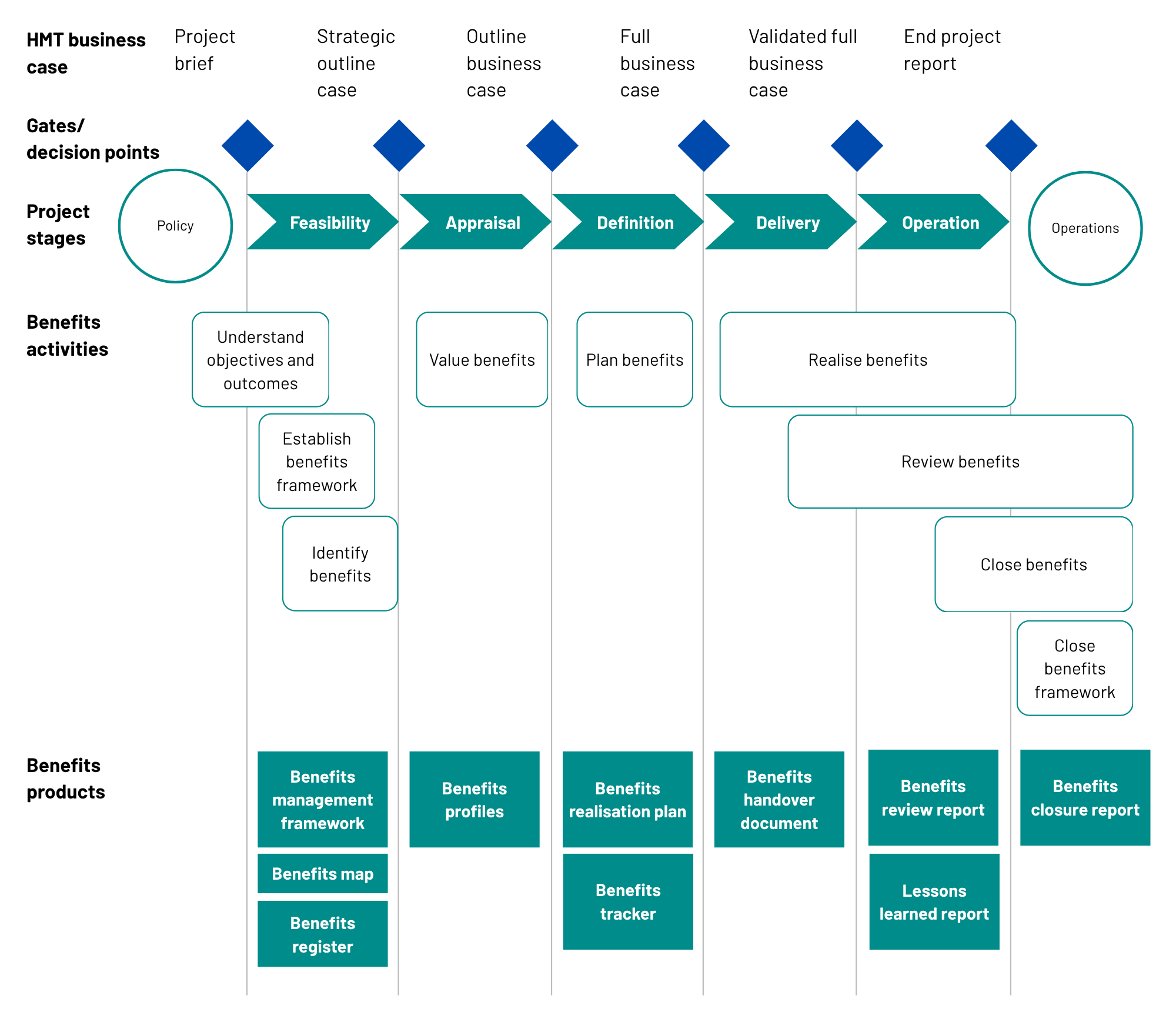
Benefits management involves a sequence of activities which can be carried out once or many times, depending on the work and how it is organised, for example as a portfolio, programme or project. The practitioner workbook explains more about this and how benefits management fits into the reference project life cycle and business cases.
Who does the activities and who oversees them varies, depending on how big and complex the work is. Roles should be agreed in advance and set out clearly.
However roles are organised, benefits management always includes the key steps below.
Understand objectives
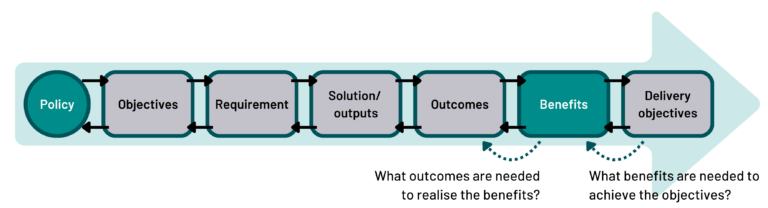
Benefits management starts with a clear understanding of the objectives and outcomes of the work. These, with any related theory of change, should guide how you identify and plan for benefits.
Develop the framework
Establish and maintain an effective benefits management framework that fits the work. Use the right methods and tools to identify and manage benefits effectively.
Identify benefits
Identify the possible benefits by exploring the impacts of the proposed changes. Group them into types and show how they link to outputs, outcomes and objectives using a benefits map. Record each benefit in a benefits register.
Value benefits
Agree an owner for each benefit. Work with them to build a benefits profile and assess its potential value over the solution’s life. Use this information to help compare options and choose the best one for the business case or support portfolio prioritisation.
Plan benefits
Update the benefits register after the way forward has been decided so all benefits and owners are included. Create a benefits realisation plan, linking this to other delivery and transition planning. The plan should show:
- how each benefit will be delivered
- when it will be delivered
- who is responsible
Realise benefits
Start work to deliver and realise benefits. Create a benefits tracker to monitor progress and act if benefits are at risk. Make sure the benefits data:
- follows government data standards
- is included in reporting and evaluation
Review benefits
Check progress on benefits throughout delivery and before closing the portfolio, programme or project. After closure, agree:
- when future reviews will happen
- how findings will support evaluation and learning
Close benefits
Close benefits once they’ve been achieved. If realising benefits continues after the portfolio, programme or project ends:
- agree who owns each benefit in operations
- agree who will oversee and report on benefits in the sponsoring organisation to support evaluation of investment outcomes
Hand over the benefits management framework, benefits register, benefits profiles and the benefits realisation plan to support ongoing delivery in operations as necessary.
Close the framework
When all benefits have been realised, produce final reports on benefits achieved and lessons learnt. Close the benefits register and framework.
Store these and other key documents in the sponsoring organisation for future use and share relevant information with the National Infrastructure and Service Transformation Authority as appropriate.