Benefits are positive, measurable impacts of change seen by stakeholders. In government, the improvements delivered by a portfolio, programme or project are expressed in terms of benefits. Government policies aim to improve lives, through public services, economic growth, social change or international work. The overall impact of these changes is known as social or public value, as set out in the Green Book.
Most policies are delivered through portfolios, programmes and projects. Their success depends on identifying, planning and realising benefits.
Thinking about benefits should start with policy development and continue through delivery and evaluation. If a change has no clear benefits, it should not normally go ahead.
What benefits management does
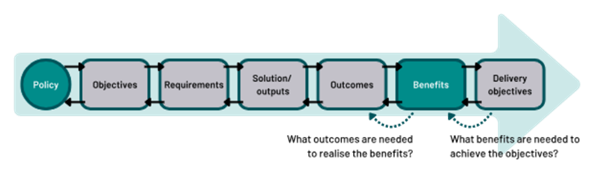
Benefits management links objectives, outcomes and benefits. It helps:
- decide whether to invest public money
- plan, manage and track delivery
- evaluate success
It’s essential for business cases, investment decisions and measuring long-term value.
Managing benefits in government can be complex. It needs clear ownership, good data and a system-wide view. It’s not just about justifying investment — it’s about making sure change delivers real, lasting value.
Managing benefits ensures that they are clearly identified, planned and realised throughout the work to deliver the changes and in operations. It plays a key role, therefore, in achieving government objectives and value from change.
Why benefits management matters in government policies are designed to deliver change for the public good. These can impact:
- directly, for example through public services
- indirectly, through wider social, economic or environmental changes, or through international work which contributes to growth, stability and security
The impacts of such changes are understood in terms of their public value, or social value, as set out in The Green Book (requires sign in).
Most government policies and changes are delivered in practice through projects, programmes and/or portfolios. The measurable positive impacts they have are known as benefits. Benefits management is therefore a critical discipline for portfolios, programmes, and projects and is central to their success.
Why benefits management matters
In government policies are designed to deliver change for the public good. These can impact:
- directly, for example through public services
- indirectly, through wider social, economic or environmental changes, or through international work which contributes to growth, stability and security
The impacts of such changes are understood in terms of their public value, or social value, as set out in The Green Book.
Most government policies and changes are delivered in practice through projects, programmes and/or portfolios. The measurable positive impacts they have are known as benefits. Benefits management is therefore a critical discipline for portfolios, programmes, and projects and is central to their success.
When to use benefits management in government
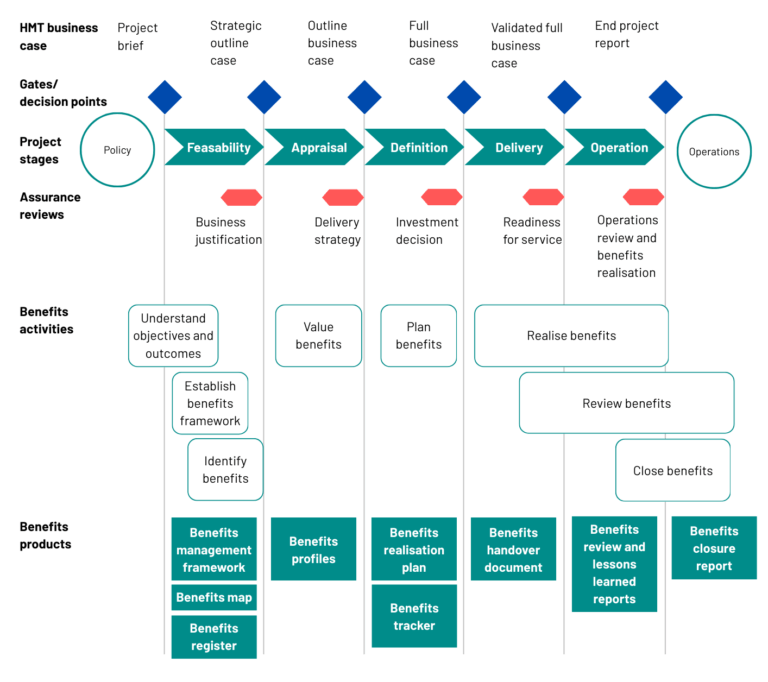
Thinking about benefits starts with policy and runs through planning, delivery and evaluation.
Benefits management links the objectives, outcomes and benefits to be delivered by a policy or change. It is central to decisions on whether to invest public funding and resources in change, and how best to do so. As such it plays a key role in investment planning and business case development.
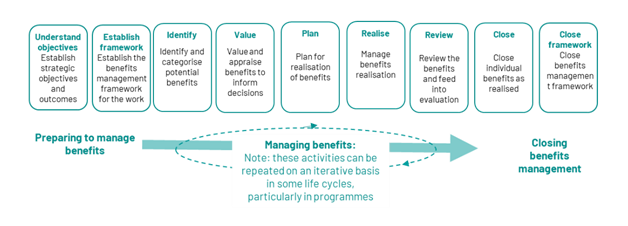
Once investment decisions are taken, benefits management provides the framework for managing and tracking the realisation of benefits, reviewing delivery against the business case, and evaluating the success of the intervention against the agreed objectives.
Managing and realising benefits can be complex and challenging, but it need not be. What matters is to take a step-by-step approach and stay focused on the objectives of the change and how best to achieve them.
The sections in Part A explains more about how benefits management works in government. It covers four areas.
What is benefits management? (Section 1)
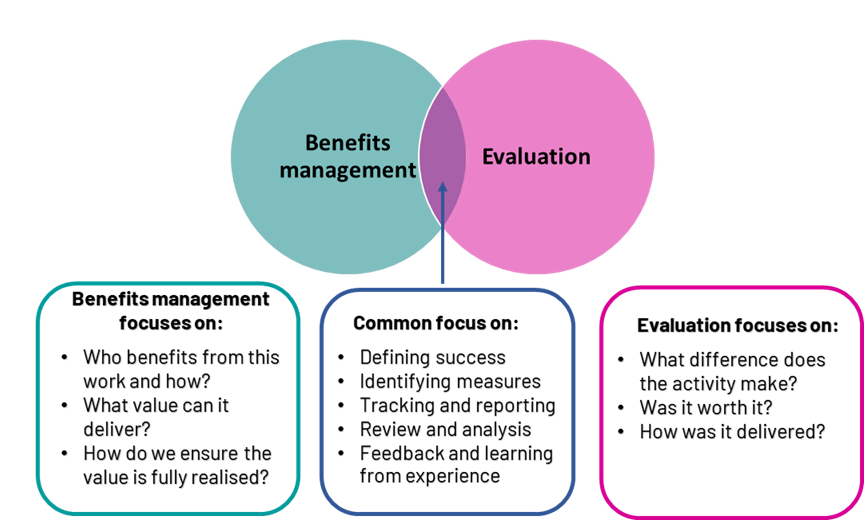
This section looks at how benefits and benefits management are defined and managed in government, the standards expected and what else to think about. It also looks at the differences between benefits management and evaluation, and how the two work together.
Who is involved in benefits management (Section 2)
This section looks at the different roles involved in benefits management, including the roles of governance and assurance.
Benefits management in portfolios, programmes and projects (Section 3)
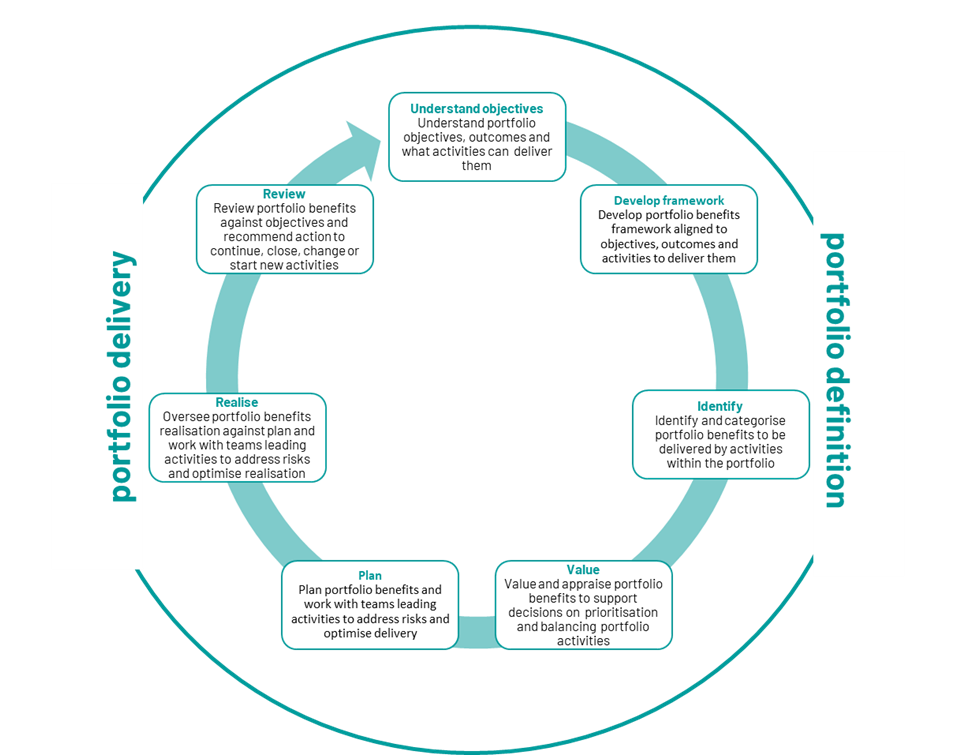
This section looks at how benefits work in government portfolios, programmes and projects, and their respective life cycles. It also describes the role benefits play in business cases.
Some common challenges (Section 4)
This section sets out some common challenges in benefits management and suggests ways of tackling them.