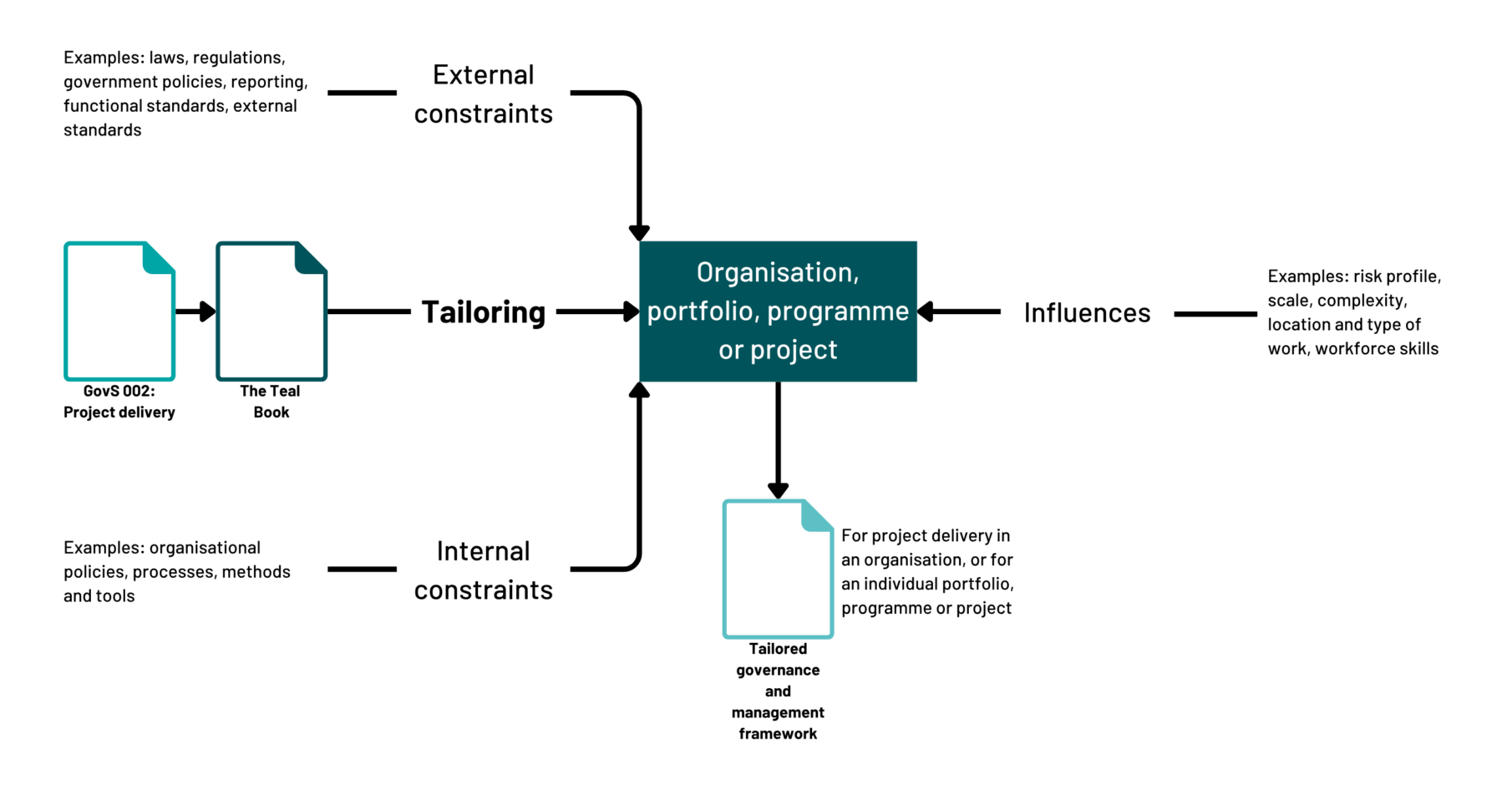
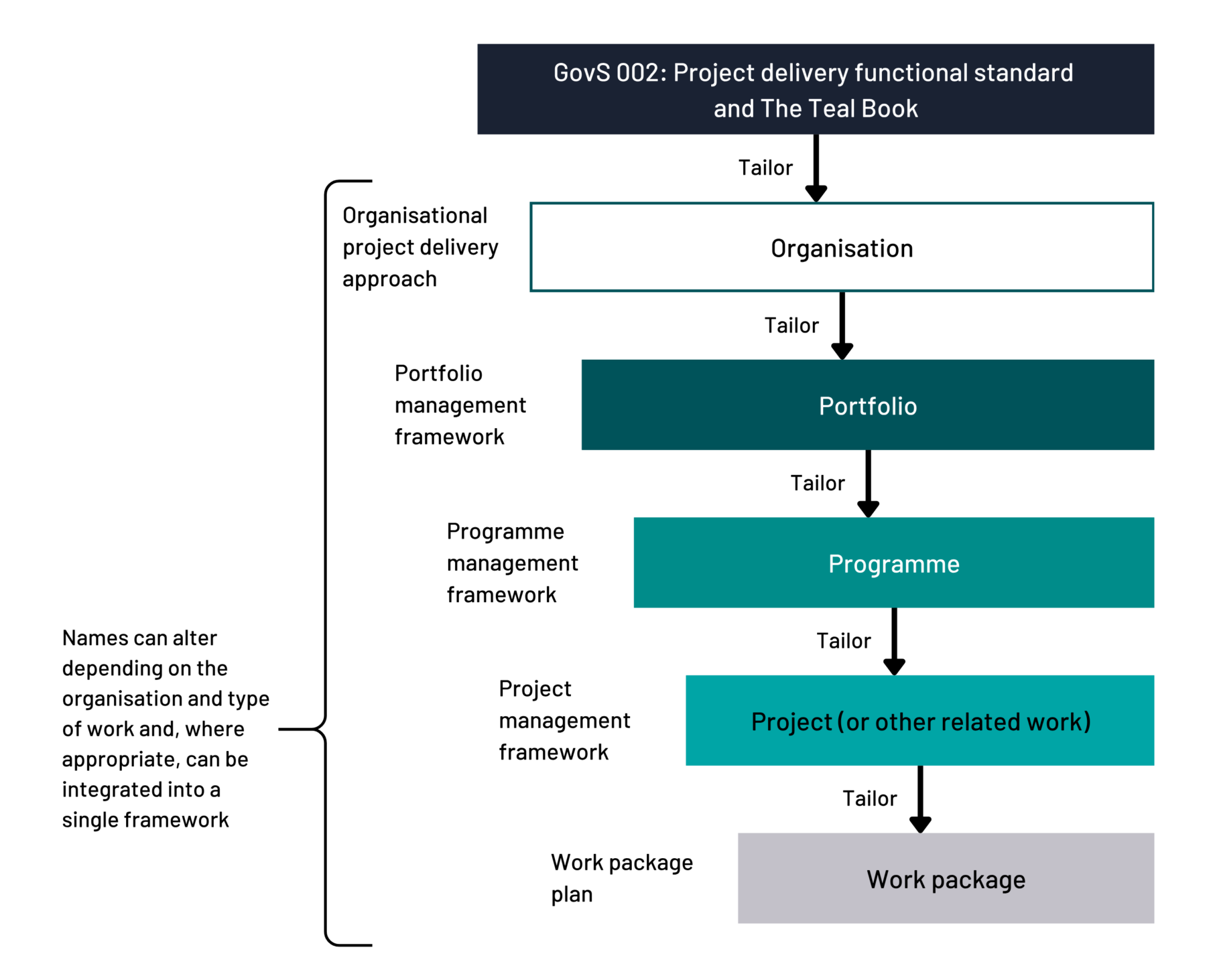
The Government Functional Standard for Project Delivery principles set out that:
- governance and management frameworks, and controls are proportionate and appropriate to the work and the level of prevailing risk
- defined working methodologies are tailored for use accordingly
Tailoring does not change the purpose of a practice, nor what should be done but allows those responsible for establishing and maintaining the governance and management framework to determine how the practice should be undertaken (see Chapter 11: The governance and management of portfolios and Chapter 13: The governance and management of programmes). This means that managers are not restricted in the methods they use and opens the way for innovation.
The following aspects of The Teal Book may be tailored:
Roles may be combined or split, provided that accountability is maintained, there are no conflicts of interest, there is sufficient capacity and the competencies in the Project delivery capability framework are met.
Management information and documentation may be combined or split into any number of documents or data sources and held in document or digital forms.
Tailoring does not mean that any of the practices in The Teal Book can be excluded. The Teal Book is built on the expectations set in the Government Functional Standard for Project Delivery on practices that need to be fulfilled. If a practice is omitted, the management of the work will be weakened and so threaten a successful outcome.
Tailoring can be done at the organisational level (see Chapter 9: Embedding The Teal Book in an organisation) or at portfolio, programme or project level.
Tailoring is not simple and requires skill, experience and judgment to get right and there is no single solution that can be applied to every portfolio, programme or project in government throughout the life cycle.