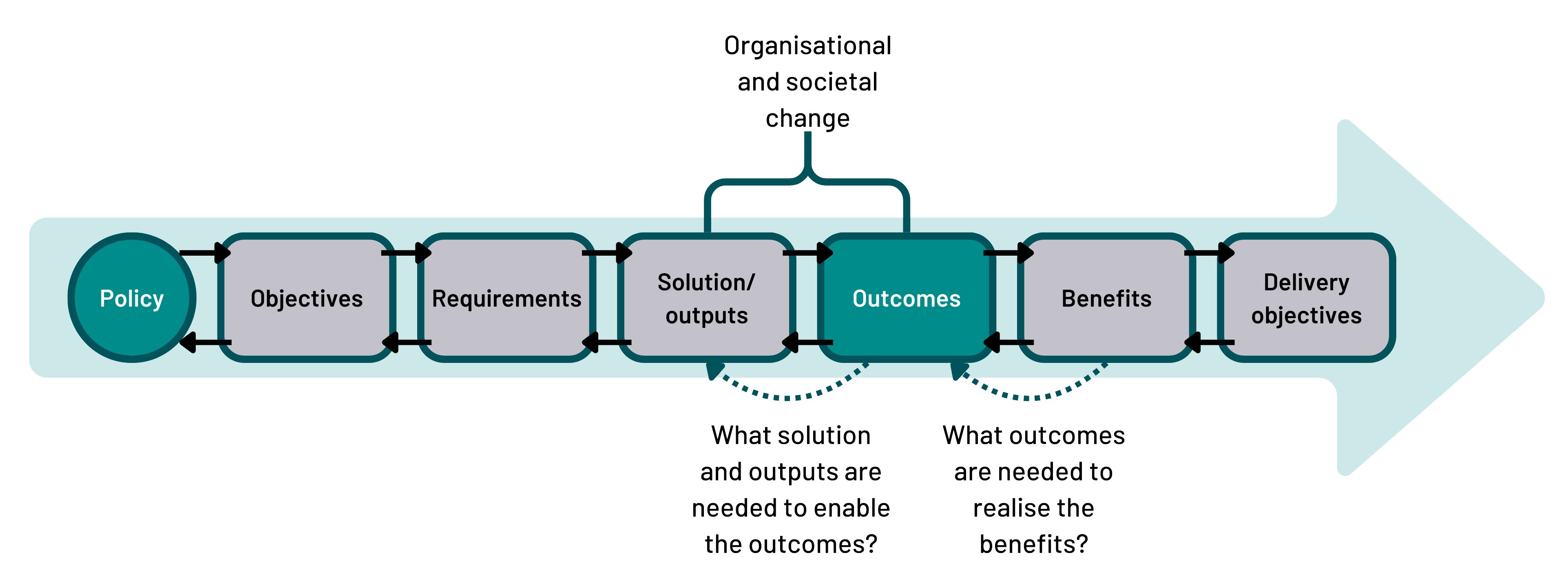
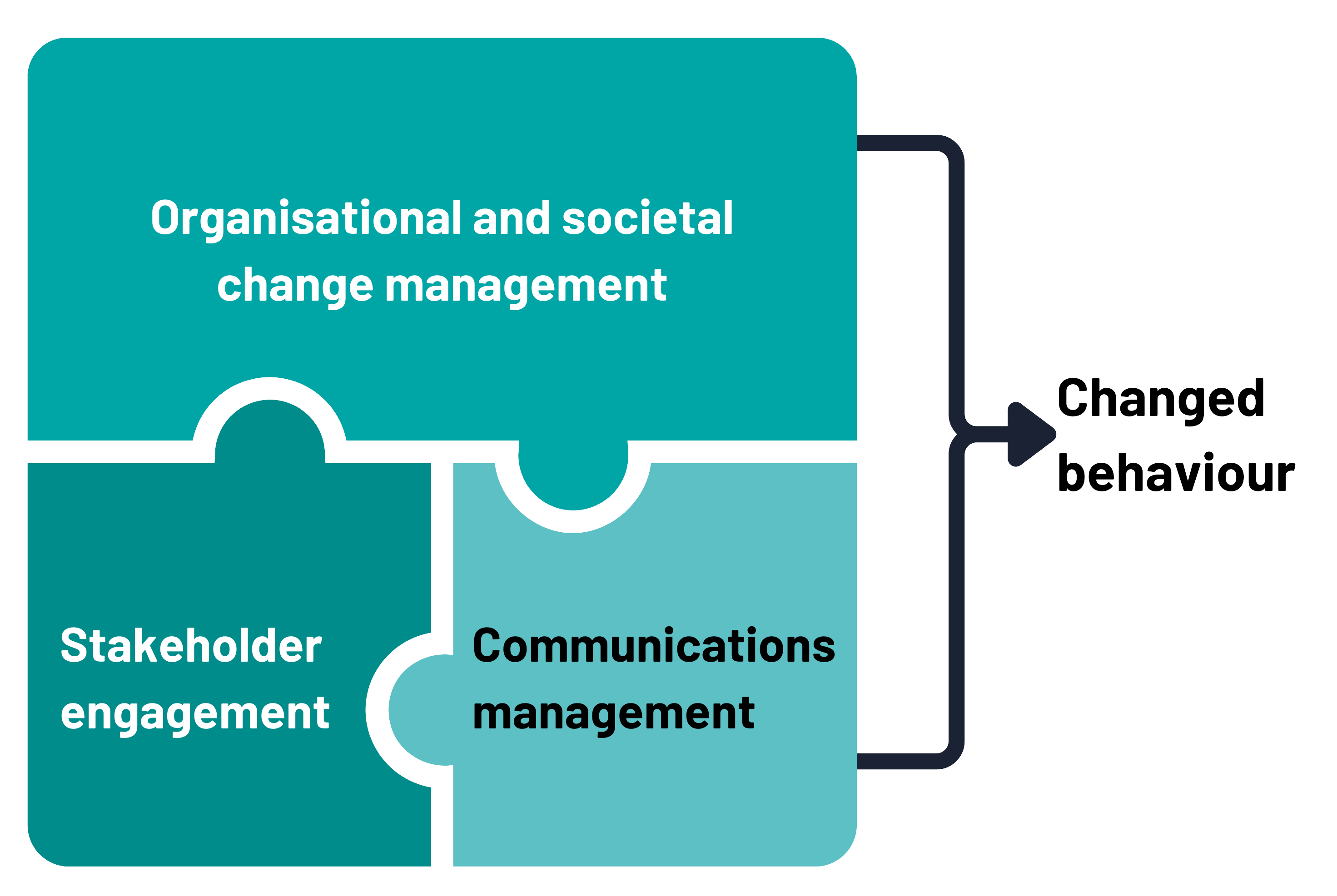
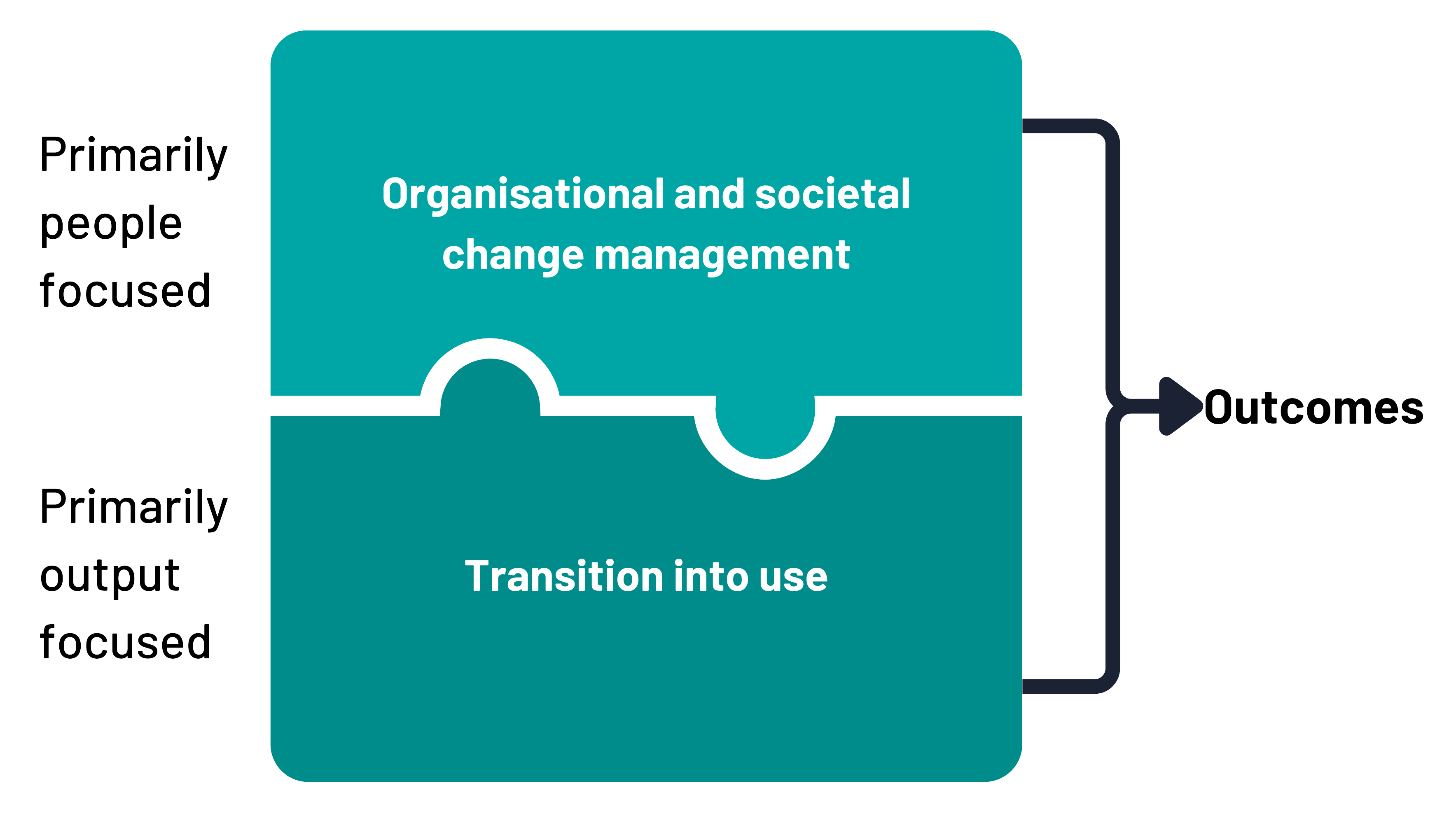
People undertaking a project delivery role require at least an awareness of planning and managing change, to ensure that it is applied in the right context, using specialists where appropriate. Accountability and responsibility for change management should be defined within the governance and management framework and reviewed on a regular basis, to avoid duplication or gaps. Typically, accountability follows the hierarchy in the work breakdown structure.
The portfolio director, in a portfolio, or senior responsible owner, in a programme or project, is accountable for change management and is the ultimate driver of the changes.
The portfolio or programme or project manager, as appropriate, is accountable for developing and managing the change management framework, including its processes, tools and techniques.
Depending on the scale and complexity of the work, the programme or project manager could be supported by a specialist change manager with the responsibility for managing change and either acting as a team member or acting as the manager of those work packages focused on change management activities. If a dedicated change manager is not necessary, the portfolio, programme or project manager, as appropriate, should undertake the role, if they have the necessary skills and experience.
Individual or closely related changes can be assigned by the change manager to a change owner, who is a named individual responsible for planning and embedding a change or a specific aspect of a change. A change owner needs to be someone who can manage a change either due to their position, authority or knowledge and experience. As a change can evolve as more information becomes available, the ownership can be reassigned to a more appropriate person if necessary. The change owner can be supported by people assisting in managing changes and by change agents.
A change agent is someone who drives and supports the required changes from within an organisation or community. They act as a catalyst, helping people move from the existing way of doing things to the new way. Typically, they provide the change owner with the ‘local’ viewpoint, motivating and providing support to those who are subject to the change, monitoring progress, addressing concerns, dealing with resistance and helping to embed the change.
More detail on the business change and implementation competency and how this relates to each project delivery role can be found in the Project delivery capability framework.